
Water Softener and Filtration in Easton, PA: Check the Water Report Before You Buy
Searching for a water softener in Easton is common. The first fact to know is that the water supplied here tests soft, so the useful question is what problem you are trying to solve before any equipment is bought.
- Licensed and insured plumbers
- Same-day service when available
- 24/7 emergency dispatch
Is your water hard? Read the report first
Easton Suburban Water Authority reported total hardness of 18.0 ppm in its 2025 water quality report, with alkalinity of 24.5 ppm and a pH of 8.0 (ESWA report). Hardness at that level is soft, around one grain per gallon by conversion.
A softener removes hardness. If the water arriving at your meter is already soft, a softener has little to remove. If you have spots, scale or dry skin, test the water at your tap and read the report before spending on equipment.
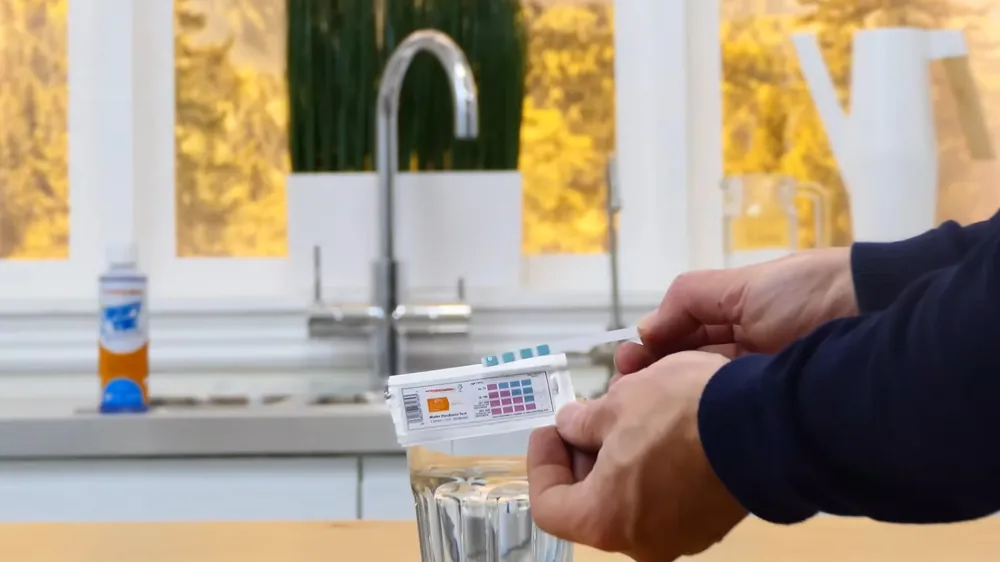
Do the test first A plumber or a water lab can test hardness at the tap. If the result matches the report, a softener is unlikely to be the answer.
Signs that look like hard water but are not
Spots on glasses can come from dishwasher rinse aid running low or detergent residue. A film on the shower door is often soap scum. Low flow from a faucet may be an aerator clogged with sediment, not scale.
A plumber can sort these causes in a visit, and fixing the real cause costs less than a system you do not need.
| What you see | Likely cause | What to try |
|---|---|---|
| Spots on dishes | Rinse aid or detergent | Adjust the dishwasher |
| Film on the shower | Soap scum | Clean and switch products |
| Weak flow at one tap | Clogged aerator | Rinse the aerator |
| Chlorine taste or odor | Treatment residual | A carbon filter at the tap |
| Scale on a kettle | Mineral content | Test the tap water hardness |
Filtration: matching the filter to the problem
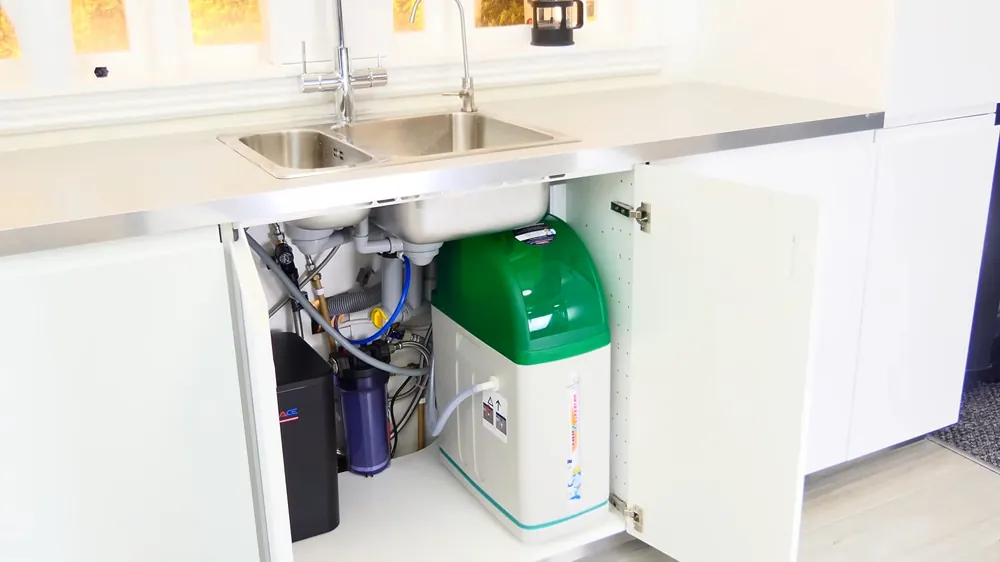
Filters address different things. A carbon filter reduces taste and odor from chlorine. A sediment filter catches particles. Reverse osmosis at one tap reduces dissolved solids for drinking water.
ESWA reported a lead 90th percentile of 0.001 ppm in 2025, with no sampled site above the action level (ESWA report). If you worry about lead from an older house, look for a filter certified for lead and ask the plumber about the pipe material. See supply line replacement for service line questions.
Call and ask before you buy.
Describe the symptom and what you already tried. The dispatcher will schedule a plumber. Same-day service is offered when available.
Call 610-904-7596 ↗When a softener or conditioner still makes sense
Some properties have a different water supply or higher mineral content, such as a private well, and a softener is more useful there. Iron staining or a sulfur smell are other cases where treatment can help, and a lab test shows which.
In either case, get a written water test and a written recommendation. Ask what the equipment removes, how much salt it uses and who services it.
Servicing an existing softener
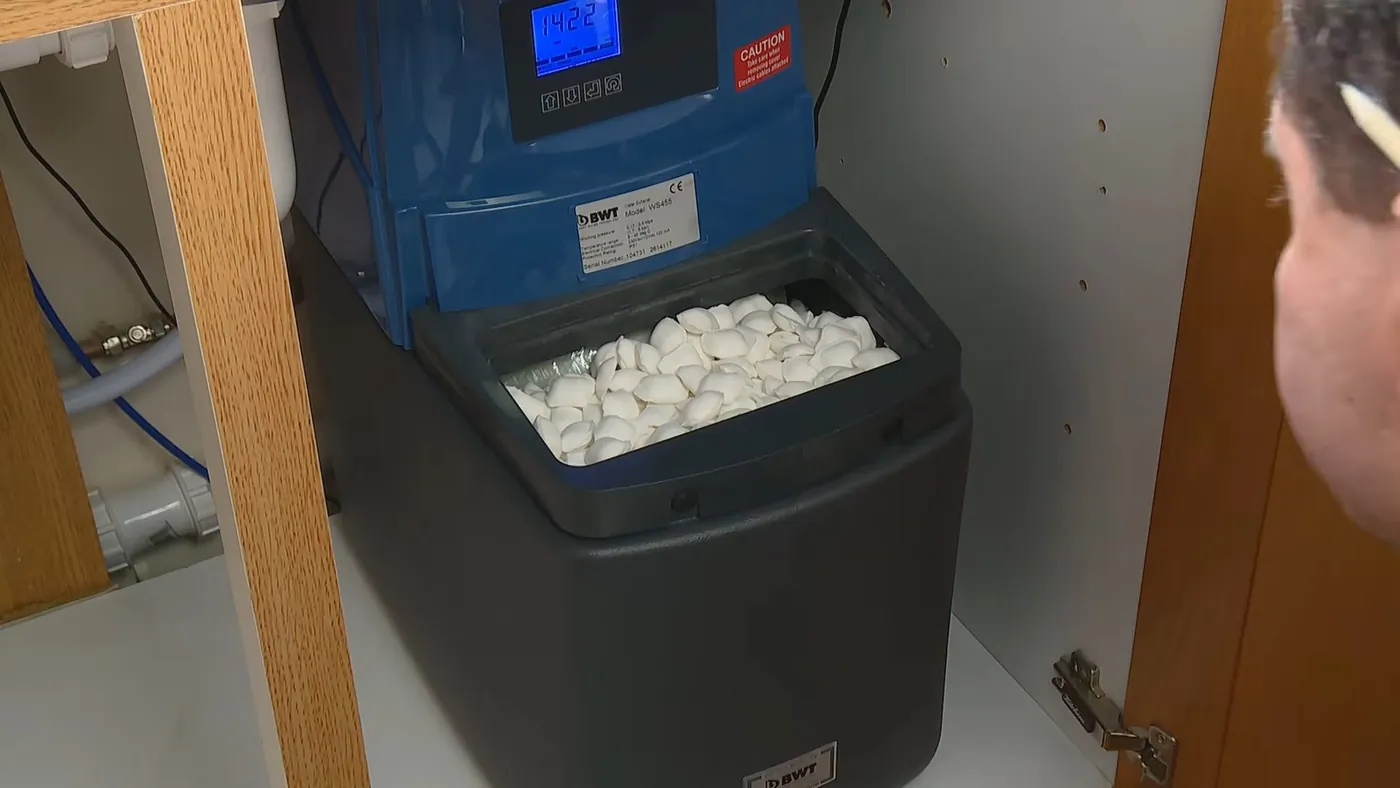
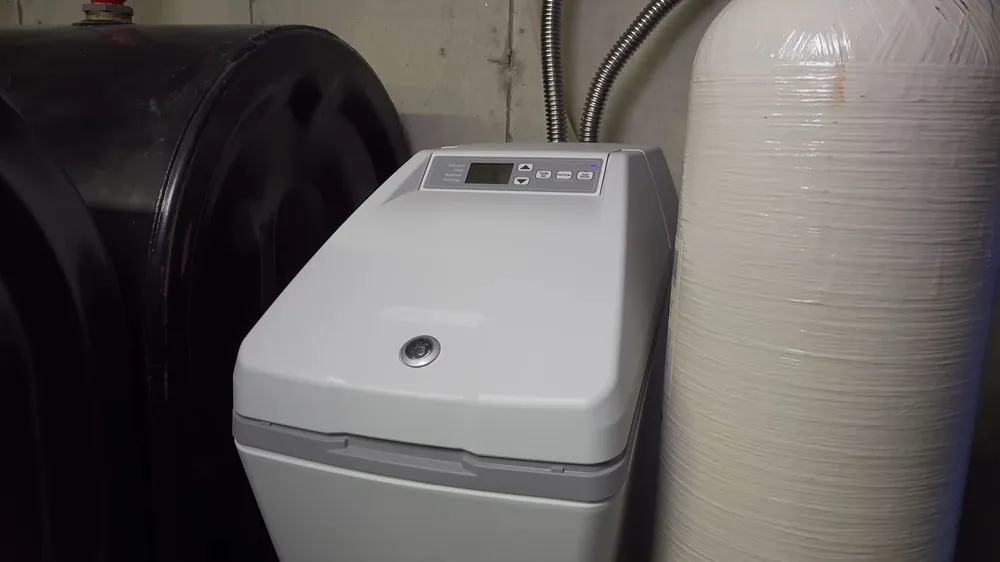
A softener needs routine care: salt level, brine tank cleaning, a working control valve and a clear drain line. Common problems are a salt bridge, a stuck valve, a bad resin bed or a drain line that overflows.
Valve replacement and reinstalling a unit after a move are plumbing jobs. A fridge water line and a softener overflow can share a supply, so a leak in one can show up in the other. If you also see wet floors, finding the leak explains how to trace it.
The short list: brine wells, valves and bypasses
- Brine well. Never reach in to retrieve an object; turn the unit to bypass and call.
- Bypass valve. Lets you send water around the softener during repair.
- Control valve. The brain of the unit; replacement is a common service.
- Drain line. It must have an air gap and a clear path.
- Fridge line. Check that it is not tied into a softened line by mistake.
Questions to ask before buying any treatment equipment
A sales visit often starts with a water test and ends with a system. A short list of questions keeps the conversation tied to your water and your problem.
- What is my measured hardness, and how does it compare to the ESWA report?
- Which problem will this equipment fix, and how will you know it worked?
- What does it cost to run each year, including salt, filters and service?
- Who services it, and how fast do they respond?
- What happens to the drain water, and is the drain line sized for it?
A written answer to each question lets you compare offers without pressure. If the test at your tap matches the utility report, ask why a softener is being recommended.
Plumbing that comes with water treatment
Installing any treatment unit means working on the supply line: a bypass valve, a drain connection and sometimes a new electrical outlet. A poor installation can cause leaks, low pressure or softened water going to places it should not, such as an outdoor spigot or a fridge line.
A plumber can plan the connections so the kitchen cold tap stays on unsoftened water if you choose a softener. Ask for a diagram of the supply, and keep it with the unit manual.
Regeneration and whole-house filters
A softener cleans its resin through regeneration, which uses salt and a drain connection. A whole-house filter has its own cartridge schedule, and the plumber can explain which one suits a given water supply.
Call and describe what it does.
Test, filter or service.
Tell the dispatcher what you notice and what equipment you have.
- Licensed and insured plumbers
- Same-day service when available
- 24/7 emergency dispatch
Water softener and filtration questions from Easton homeowners
How do I know if I have hard water in Easton?
Read the ESWA water quality report, which listed 18 ppm hardness for 2025, then test at your tap with a strip or lab test. If the result is low, spots and film likely have other causes, such as soap or rinse aid.
Can a fridge water line and a softener overflow be connected?
They can share a supply, so a leak in one may show up near the other. Turn off the supply to each, find where the water appears and have a plumber trace it. Do not assume a softener is the source.
What is water treatment or conditioning?
It covers filters, softeners and conditioners that change the water at your tap. Each addresses a different problem. Match the product to a measured problem, not to a symptom.
What do I do if an object falls into the softener brine well?
Do not reach in. Set the unit to bypass, avoid stirring the brine and call a plumber. Salt water is irritating, and a stuck object can damage the unit.
What is involved in replacing or reinstalling a water softener valve?
The plumber isolates the unit, disconnects the old valve or the unit, installs the new one, restores the drain and brine lines and checks for leaks. Ask whether the unit needs new fittings or a bypass.